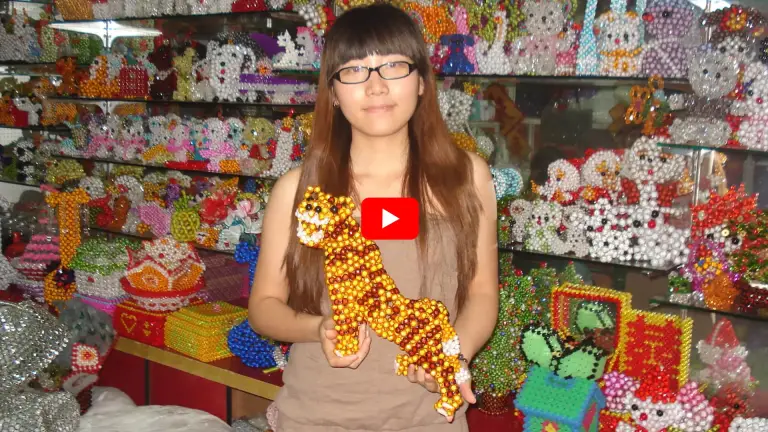
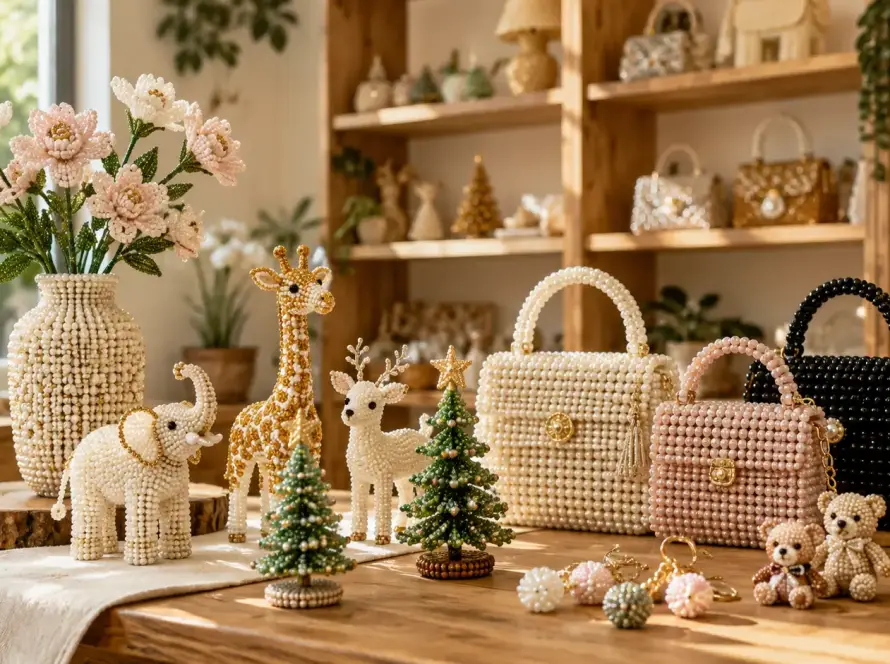
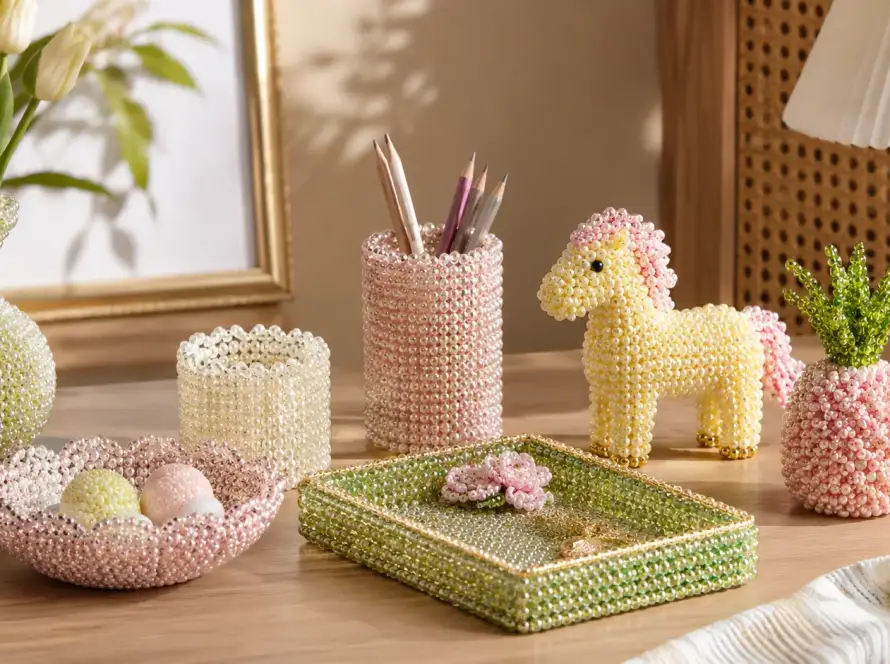
Sourcing furniture or linens for a hotel is a fairly predictable process — specs, tolerances, and suppliers all speak the same language. Handmade decor is a different animal. The moment a procurement team starts looking into beaded vases, figurines, or lobby accent pieces, a new set of questions shows up: What’s a normal MOQ for something handmade? How do you get consistent color across a bulk order? Can a factory actually match your brand palette, or is that wishful thinking?
This article answers the questions we hear most often from hotel groups, interior design firms, and hospitality buyers before they place their first handicraft wholesale order. Whether you’re sourcing a handful of accent pieces for one property or planning a rollout across a chain, the goal here is to give you a clear, practical picture of how this corner of sourcing actually works.
I. Product & Sourcing Basics
“Handicraft wholesale” covers a wide range of products, but in the hospitality context it usually means decorative items made substantially by hand — beaded vases, figurines, trays, ornaments, and accent pieces — sold in bulk to distributors, designers, and hotel groups rather than one-off to individual consumers. It sits somewhere between fully mass-produced decor (cheap, consistent, but generic) and one-of-a-kind artisan pieces (beautiful, but impossible to scale).
For hotels specifically, beaded handicraft wholesale has become popular for a few reasons. The texture and detail read as premium even from a distance, which matters in lobbies and reception areas where guests form first impressions in seconds. The pieces also carry a handmade quality that mass-produced resin or plastic decor simply can’t replicate, and many buyers like that beaded pieces can be swapped seasonally — a beaded pumpkin arrangement for autumn, beaded ornaments for the holidays, then back to a neutral vase for spring.
Typical categories you’ll come across when working with a handicraft wholesale manufacturer include:
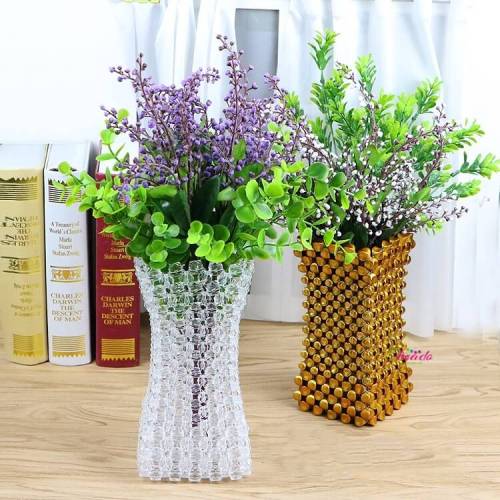
- Beaded vases and centerpieces for lobbies and concierge desks
- Beaded figurines and animal pieces for shelving and display
- Beaded trays, bowls, and small accent objects
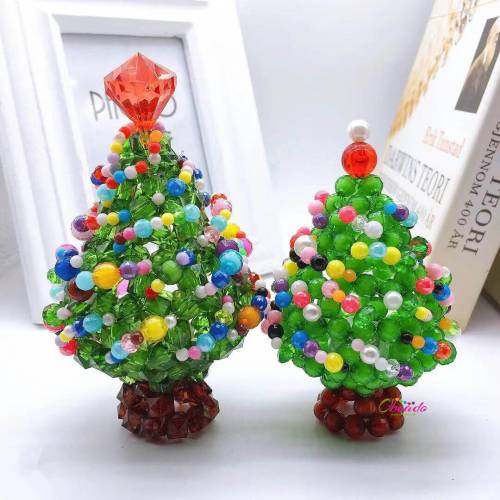
- Seasonal and holiday beaded decor
- Beaded bags and small gift items for VIP amenities or gift shops
Some of this can be bought as ready made handicraft wholesale — existing designs a factory already produces — while other buyers go the custom route entirely. Both paths are common, and which one makes sense depends largely on your timeline and how tightly the piece needs to match your brand.
II. MOQ & Order Sizing
Minimum order quantities are usually the first thing that surprises procurement teams new to this category. Because these items are handmade, MOQs tend to be set per color or per design rather than as one flat number across the whole order, and they typically scale with the size and complexity of the piece.
A rough guide, based on how most factories in this space structure things:

The good news is that most manufacturers will let you combine colors or designs to hit these thresholds, so a low MOQ handicraft wholesale order is often more achievable than buyers expect. If a hotel group wants to test a product line before committing to a full rollout, ordering a small mixed batch across two or three properties is a common — and low-risk — way to start.
One tip worth mentioning: when you’re sizing your first order, think about it as a pilot rather than a final commitment. A modest first batch lets you evaluate quality, consistency, and how the pieces actually look in your space before scaling up to a chain-wide order.
III. Customization & Branding
This is where handicraft supply differs most from ordering standard hospitality furnishings. Because the products are handmade, color and design customization are usually more flexible than buyers expect — but the process still needs structure to work well.
Most custom handicraft wholesale orders follow a similar path:
- You share your brand colors, ideally as Pantone references or physical swatches
- The factory confirms feasibility with the beads and materials available
- A sample is produced for your approval before any bulk production starts
- Design revisions happen at the sample stage — not after 500 units are already made
Color matching is generally strong when Pantone codes are provided, though it’s worth knowing that beadwork has natural texture and light reflection that photographs and renders can’t fully capture, so approving a physical sample rather than a digital mockup alone is always the safer move.
Full OEM development — designing a product from scratch based on your brief rather than adapting an existing design — is also widely available. This takes longer than customizing a stock item, but it’s the route to take if you want something genuinely unique to your property or brand, rather than a color variation of a design other hotels may already be using.
IV. Samples & Quality Control
Skipping the sample stage is the single most common mistake first-time buyers make in this category, and it’s almost always a mistake worth avoiding. A sample tells you things a product photo can’t: how the beads catch light, how consistent the color is across a batch, how the piece feels in hand, and whether the scale actually works in your space.
Here’s roughly what to expect:
- Sample production generally takes 10–15 business days
- Sample costs are frequently credited back to your bulk order once you proceed
- You should be able to request revisions before bulk production begins, not after
On the factory side, quality control should happen at two points — during production, to catch inconsistencies in bead color or craftsmanship early, and again before shipment, to check the finished batch against your approved sample. If a supplier can’t clearly describe their QC process at both stages, that’s worth a follow-up question before you commit to a bulk order.
V. Pricing & Payment
Pricing in handicraft wholesale sourcing depends heavily on materials (glass beads, acrylic beads, seed beads), piece size, design complexity, and order volume. Buying factory-direct rather than through a trading company or agency typically brings meaningfully better pricing, since you’re cutting out a markup layer that adds cost without adding value to the product itself.
A few things procurement teams should expect and can reasonably ask for:
- Tiered pricing for repeat orders or larger volumes
- Transparent quotes with no hidden fees tacked on later
- Clear payment terms, typically a deposit to begin production with the balance due before shipment
Standard international terms usually involve a percentage deposit upfront — commonly around 30% — with the remainder paid before the goods ship. Bank transfer is the most common payment method, though some suppliers also accept PayPal or trade assurance platforms for added buyer protection on early orders. If you’re working with a new supplier, it’s reasonable to ask what protections are available before wiring a deposit.
VI. Lead Times & Logistics
Handmade production takes longer than injection-molded decor, and setting the right expectations upfront avoids a lot of frustration later. As a general benchmark:
- Sample production: 10–15 business days
- Bulk production: roughly 3–5 weeks, depending on order size and complexity
- Shipping to the US, Europe, or Australia: an additional 5–15 business days
For handicraft wholesale from China specifically, sea freight is the standard choice for larger orders — it’s cost-effective, though it adds transit time. Air or express courier makes sense for urgent or smaller shipments, such as a sample batch or a single property’s initial order. A supplier experienced in export should also be able to handle customs documentation without you having to manage that separately, which matters more than buyers sometimes realize until it goes wrong.
The practical takeaway: build in at least six to eight weeks from placing a bulk order to delivery, longer during peak seasons like the run-up to the winter holidays when factories are busiest.
VII. Vetting a Handicraft Wholesale Supplier
Not every craft wholesale supplier operates the same way, and the difference between a good sourcing experience and a frustrating one often comes down to a handful of questions asked upfront.
Worth confirming before you commit:
- Is this a factory, or a trading company reselling someone else’s production? The answer affects both pricing and your ability to customize.
- How many years have they been manufacturing, and do they have experience with hospitality clients specifically?
- Can they provide references, photos, or video from previous hotel or hospitality orders?
- Is their QC process clearly explained, not just claimed?
- Are their MOQs and pricing structure transparent from the first conversation, or vague until you push?
A few red flags are worth watching for: suppliers who won’t provide a sample before bulk production, pricing that seems too good to be true relative to competitors, or vague answers about factory location and production capacity. Handmade claims should be verifiable — a legitimate handcraft wholesale manufacturer is usually happy to share factory photos, video, or even arrange a video call to show their production process, because it’s genuinely part of their value proposition rather than something to hide.
VIII. Practical Buying Checklist
Before sending your first inquiry, it helps to have your requirements organized. A quick checklist:
- Product type and quantity needed per property (or across the chain)
- Brand colors, ideally as Pantone codes or physical swatches
- Budget range and target price per unit
- Timeline: when do the pieces need to arrive on-site?
- Whether you need a stock design or a custom/OEM piece
- Preferred shipping method based on urgency and order size
- Payment terms you’re comfortable with as a first-time buyer
Having these answers ready before you reach out speeds up quoting significantly and helps a supplier give you an accurate response instead of a generic one.
IX. Recommended Supplier of Hotel Beaded Decor
Sourcing handmade beaded decor for a hotel doesn’t need to be complicated once you know what to expect. MOQs, customization, samples, pricing, and lead times all follow reasonably predictable patterns once you’ve worked with the right partner — the key is asking the right questions early and treating your first order as a chance to evaluate quality and communication before scaling up. With a clear process and a supplier who’s transparent from the first inquiry, handicraft wholesale sourcing can become a reliable, repeatable part of how you furnish and refresh your properties, rather than a one-off gamble.
If you’re now looking for a manufacturer to actually work with, Obeado Crafts Co., Ltd. is worth a conversation. Based in Guangxi, China, Obeado has been manufacturing handmade beaded crafts since 2011, with a factory team and network of skilled artisans producing everything from beaded vases and figurines to seasonal decor and hospitality gifting pieces.
Ready to see the quality for yourself? Reach out to Obeado Crafts for a sample or a quote tailored to your property’s needs.