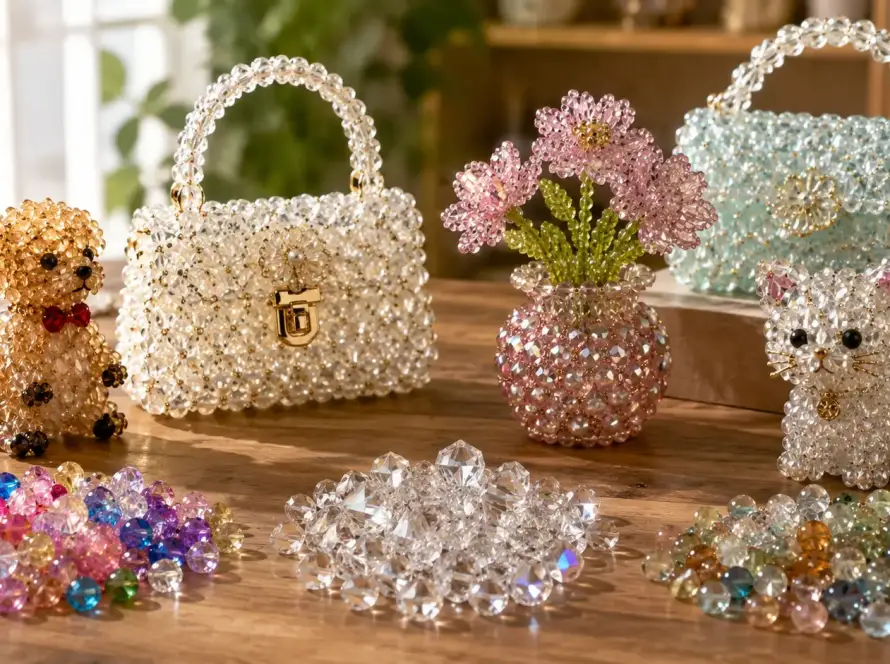
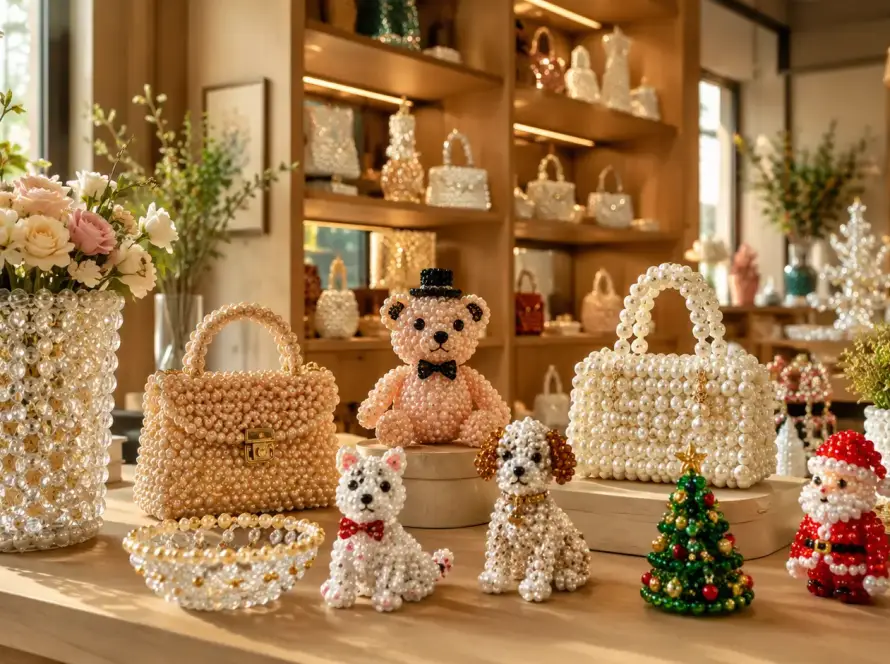
Walk into any home decor store right now and you’ll notice the same thing popping up again and again: beads. Not the friendship-bracelet kind from summer camp, but grown-up, textural, handcrafted pieces — vases wrapped in shimmering strands, trays lined with tiny glass spheres, ornaments that catch the light in a way flat surfaces just can’t. Beaded home decor has quietly moved from a niche boho accent into a mainstream design staple, and for good reason. It brings warmth, texture, and a sense of craftsmanship that mass-produced plastic or ceramic pieces often lack.
This guide walks through how to use beaded pieces in every room of the house, what separates a well-made item from a flimsy one, and how to care for the pieces you already own. Along the way, we’ll also touch on sourcing — because whether you’re furnishing your own home or stocking a retail shelf, knowing where quality beadwork home decor actually comes from matters just as much as knowing how to style it.
I. Why Beaded Decor Works in Modern Interiors
Beads solve a problem that a lot of interior design runs into: everything starts to look the same. Smooth ceramic, painted wood, printed textiles — after a while, a room full of “safe” materials can feel flat. Beaded pieces introduce texture and dimension in a way that’s hard to replicate with anything else. Light hits a cluster of glass or acrylic beads differently depending on the angle, the time of day, even where you’re standing in the room, which gives a static object a bit of movement.
There’s also the versatility factor. Beaded home decor isn’t locked into one aesthetic. A woven bead vase with muted earth tones fits comfortably into a coastal or minimalist space, while a jewel-toned beaded tray leans into a maximalist or eclectic look. Boho interiors were probably the first to fully embrace beading home decor, but at this point you’ll find it in Scandinavian-inspired homes, traditional dining rooms, and everything in between.
And then there’s the handmade element. Most quality beaded pieces are still strung and shaped by hand, which means no two are perfectly identical. In a market saturated with injection-molded decor that looks the same in every store, that small imperfection is actually a selling point. Buyers, especially the kind furnishing a home with intention rather than convenience, tend to respond to that story.
II. Living Room: Statement Pieces & Accents
The living room is usually where beaded decor gets to show off. A beaded vase — whether it’s holding dried florals or standing empty as a sculptural piece — works well as a centerpiece on a console table or mantel. Candy trays and decorative bowls made from beadwork also do double duty here: they hold small items like remote controls or coasters, while adding visual texture to a coffee table that might otherwise be bare.
If you want beads to feel intentional rather than scattered, a few styling principles help:
- Pair one or two statement beaded pieces with plain, neutral furniture so the texture actually stands out.
- Group smaller items (like a beaded bowl and a beaded figurine) rather than spreading single pieces across the room.
- Stick to a consistent color family across your beaded accents so the room reads as curated, not cluttered.
Beaded wall hangings or garlands are another option for living rooms with more open wall space, particularly above a sofa or bookshelf where a flat picture frame might feel too predictable.
III. Bedroom: Soft, Personal Touches
Bedrooms call for a lighter hand. This is a space for rest, so beaded decor here should feel personal and understated rather than loud. A small beaded trinket tray on the nightstand — useful for rings, earrings, or a watch — is a practical starting point. Beaded figurines on a dresser, or a hanging charm near a mirror, add a bit of character without overwhelming the room.
Color and finish matter more in the bedroom than in almost any other room. Soft, matte-finish beads in blush, sand, or muted sage tend to suit the low-stimulation feel a bedroom is supposed to have, while high-shine crystal or brightly colored pieces can read as too energetic for a space meant for winding down. A few more ways to bring beaded decor into a bedroom without disrupting the calm:
- Use a beaded ring dish or jewelry tray as a functional catch-all rather than a purely decorative object, so it earns its spot on the nightstand.
- Add a single beaded figurine or small vase on a dresser or windowsill, ideally somewhere it catches natural morning light.
- Hang a small beaded charm or tassel from a mirror frame or headboard corner for a soft, almost jewelry-like accent.
- Match beaded pieces to existing textiles, like a throw blanket or curtain trim, so the room still feels cohesive rather than assembled from unrelated pieces.
One thing worth keeping in mind: bedrooms benefit from restraint. One or two well-chosen beaded pieces will do more for the room than five scattered around. If you’re decorating for a client or a retail display meant to represent a bedroom vignette, the same rule applies — less genuinely is more here. Guest bedrooms are a bit more forgiving, since they’re used less often, so this is often where designers and homeowners alike feel comfortable experimenting with a bolder beaded piece they wouldn’t necessarily put in their own primary bedroom.
IV. Dining Room & Kitchen: Functional Beauty
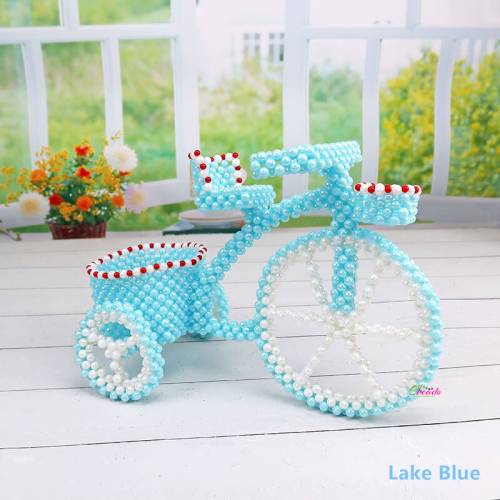
This is where beaded decor earns its keep by being useful, not just decorative. Beaded candy trays and fruit bowls are a natural fit for a dining table or kitchen counter, and they come in enough shapes — hexagon, octagon, peacock, even novelty shapes like a chicken or butterfly — that there’s room to match almost any table setting. Beaded coasters protect surfaces while adding texture underneath a glass or mug.
Dining spaces also tend to get more daily use and more guest visibility than almost any other room, which makes them a good place to invest in a few higher-quality statement pieces rather than a lot of small ones. A beaded fruit bowl doing double duty as a centerpiece, for instance, means the room never looks undressed even on a day when nothing else has been set out. A few practical ways beaded pieces earn their place at the table:
- Use a beaded tray as a landing spot for keys, mail, or small kitchen items near the counter’s edge, so it’s functional even between meals.
- Rotate candy trays or bowls seasonally — a warm amber or copper tone for autumn, a cooler blue or white palette for the holidays — to keep the tablescape feeling current without buying new furniture.
- Layer a beaded runner-style piece or a cluster of small beaded ornaments down the center of a dining table for gatherings, rather than relying on flowers alone.
- Pair beaded pen holders or small trays near a kitchen recipe corner or coffee station, where they’re both decorative and genuinely handy.
For a warmer, more layered tablescape, try mixing beaded pieces with natural materials like wood, rattan, or linen — the contrast between smooth beads and rougher natural textures tends to look more intentional than beads on their own. This is also a room where novelty shapes tend to work better than they would elsewhere in the house; a butterfly or peacock-shaped tray feels playful on a dining table in a way it might feel out of place in, say, a home office.
V. Home Office / Study Corner
Desks are personal spaces, and beaded decor is a low-effort way to make one feel less sterile. A beaded pen holder is the obvious starting point — practical, and available in enough playful shapes (bicycles, shoes, kawaii characters) to suit almost any personality. Small beaded figurines placed near a monitor or bookshelf add a bit of personality without taking up much desk real estate.
Home offices have become one of the fastest-growing categories for small decorative objects in general, largely because more people are spending entire workdays looking at the same small space. A beaded piece within eyeglance of a laptop screen does more functional work than its size suggests — it gives the eyes somewhere to rest during a long call or a stretch of focused writing. A few ways to bring beaded decor into a workspace without cluttering it:
- Keep a beaded pen or pencil holder within arm’s reach on the desk itself, since it’s one of the few decorative pieces in an office that also earns its space functionally.
- Use a small beaded bowl for paperclips, USB drives, or loose desk items instead of a plain plastic organizer.
- Add one figurine or small ornament on a shelf behind the desk, ideally visible on video calls, where it adds warmth to an otherwise plain background.
- Choose muted or neutral bead tones for a professional home office, and save brighter, more playful pieces (like novelty pen holders) for a creative studio or a child’s study corner.
For businesses furnishing shared office spaces or reception areas, this is also a place where handmade home decor with beads can quietly reinforce a brand’s aesthetic — a hospitality company or boutique retailer, for instance, might use beaded accents in a reception area to echo the same craftsmanship customers see in the products they sell. Co-working spaces and client-facing offices in particular benefit from a few well-placed beaded pieces, since they signal a level of care that a bare desk or an empty shelf simply doesn’t.
VI. Entryway & Shelving: First Impressions
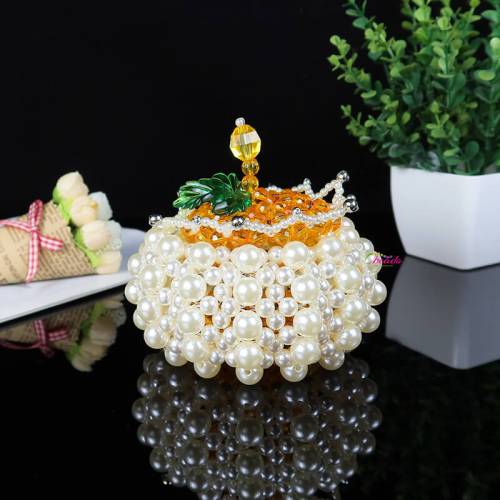
Entryways set the tone for the rest of the home, and they’re often underdecorated simply because there’s limited space to work with. A beaded ornament or figurine on a console table near the door adds a welcoming touch without requiring much room. Open shelving is another good spot — grouping beaded pieces in odd numbers (three tends to work better than two or four) and varying their heights creates a display that looks styled rather than accidental.
Seasonal swaps are worth considering here too. Beaded Christmas ornaments or holiday-themed figurines can rotate in and out of an entryway display, giving the space a reason to change throughout the year instead of staying static.
VII. How to Choose Quality Beaded Decor
Not all beaded decor is created equal, and the difference usually comes down to a few specific factors. If you’re buying for your own home, or sourcing home decor with beads for a retail business, here’s what actually separates a piece worth keeping from one that falls apart within a season.
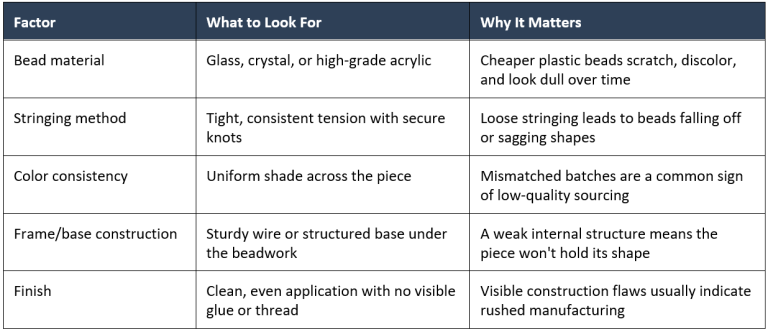
Handmade pieces will always have some natural variation — that’s part of the appeal — but there’s a difference between charming imperfection and poor craftsmanship. If you’re evaluating a supplier for custom home decor with beads, it’s worth asking for samples before committing to a bulk order, since photos alone rarely tell the full story of bead quality or stringing durability.
VIII. Caring for Your Beaded Decor
Beaded pieces are more durable than they look, but a little care goes a long way toward keeping them looking new:
- Dust regularly with a soft, dry brush or microfiber cloth rather than a damp one, since moisture can weaken thread or adhesive over time.
- Avoid harsh chemical cleaners; a mild soap and water solution, applied sparingly, is usually enough for glass or acrylic beads.
- Keep pieces out of direct, prolonged sunlight if the beads are dyed, as some colors can fade over years of exposure.
- Store seasonal items (like beaded Christmas decor) in a padded box rather than loose in a bag, so strands don’t tangle or beads don’t chip against each other.
- Check stringing periodically on pieces that get handled often, like trinket trays or pen holders, and re-secure loose threads before they become a bigger repair.
IX. Recommended Supplier of Home Decor with Beads
Beaded decor has earned its place in modern interiors because it does something a lot of decor categories can’t: it adds texture, handmade character, and a bit of visual movement to spaces that might otherwise feel flat. From a statement vase in the living room to a small trinket tray on a nightstand, there’s a place for beadwork home decor in nearly every room, provided it’s chosen with a bit of intention and sourced from someone who actually knows the craft.
If you’re a retailer, interior stylist, or gift shop buyer looking to stock ready made home decor with beads rather than build a collection piece by piece, sourcing from an experienced manufacturer makes the process considerably easier. This is where Obeado Crafts Co., Ltd. comes in.
Based in Guangxi, China, Obeado has been producing handmade beaded crafts since 2011 — starting as a small workshop and growing into a full production facility that works with a network of skilled artisans. The company specializes in beaded home decor, vases, figurines, trays, and pen holders, alongside beaded bags and seasonal collections like Christmas ornaments.
Obeado Crafts Co., Ltd.
Web: https://obeado.com/
Email: sales@obeado.com