Ask any event planner what keeps them up the night before a big install, and “will the décor arrive on time and on budget” is usually near the top of the list. Beaded handicraft pieces — table centerpieces, beaded vases, decorative figurines, favor bags, and ornamental accents — have become a go-to for weddings, galas, and corporate events because they photograph beautifully and feel far more premium than mass-produced plastic decor. The problem is that sourcing them wholesale can quickly turn into a maze of minimum order quantities, confusing shipping quotes, and suppliers who disappear after the deposit clears.
This guide walks you through exactly how to source beaded decor at wholesale prices without cutting corners on quality or timeline. You’ll learn where the real costs hide, how to vet a handicraft wholesale supplier properly, and what questions separate a dependable manufacturing partner from a risky one. Whether you’re planning your first bulk order or you’ve been burned before by a bad handicraft wholesale sourcing experience, there’s something here for you.
I. Why Beaded Decor Is a Smart Choice for Events
Beaded decor has earned its place on the modern event tablescape for reasons that go beyond trend cycles.
- Visual texture and light play: Beads catch candlelight and string lighting in a way that flat surfaces simply can’t, giving photographers and guests something to remember.
- Versatility across themes: A single beaded vase or figurine can fit a rustic barn wedding, a glamorous corporate gala, or a festive holiday party depending on colorway and styling.
- Perceived value: Handmade beaded pieces read as artisanal and intentional, which elevates the overall look of a tablescape without the price tag of fresh floral or crystal.
- Durability and reusability: Unlike fresh flowers or paper decor, well-made beaded pieces can be reused across multiple events, which is a major selling point when you’re pitching decor packages to repeat corporate clients.
- Customization potential: Beaded crafts can be produced in custom colors, sizes, and shapes to match a couple’s palette or a brand’s identity — something off-the-shelf decor rarely offers.
For planners building recurring packages — think hotel banquet teams, wedding planning agencies, or corporate event firms — beaded decor also solves a real operational problem: it stores flat or compactly, survives transport between venues, and doesn’t wilt if an event runs long. That combination of aesthetics and practicality is exactly why more planners are moving away from one-off retail purchases and toward handicraft wholesale suppliers who can produce at volume.
II. The Real Cost Drivers Behind Beaded Decor
Before you can control costs, you need to know where they actually come from. Most budget overruns on beaded decor don’t happen because the beads themselves are expensive — they happen because of decisions made earlier or later in the sourcing process.
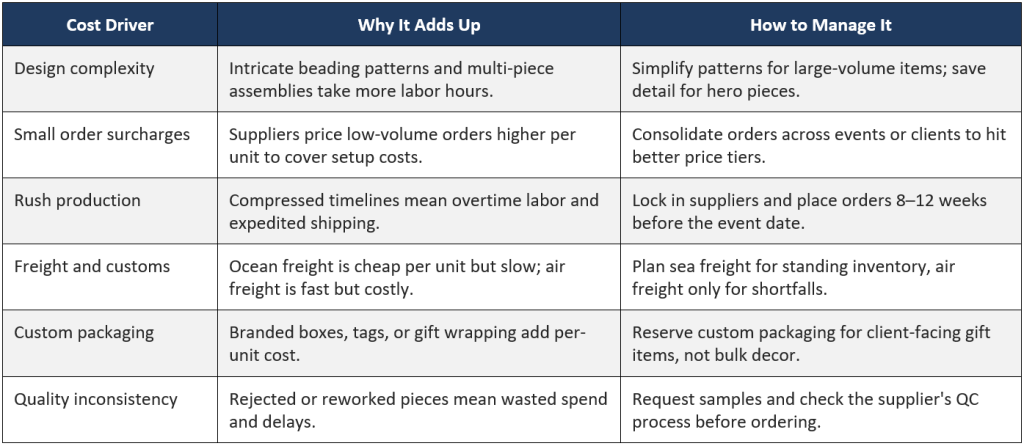
Notice that price-per-bead is rarely on this list. The line items that actually break budgets are almost always tied to timing, order structure, and communication — which means they’re preventable with better planning, not a cheaper supplier.
III. Step-by-Step: How to Source Beaded Decor Wholesale
Sourcing wholesale décor doesn’t have to be complicated once you break it into a repeatable process. Here’s the sequence experienced buyers follow.
1. Define your decor brief before you search
List the exact items, quantities, dimensions, colorways, and delivery date before contacting anyone. A vague brief is the number one reason quotes come back inconsistent and hard to compare.
2. Shortlist a handicraft wholesale supplier list
Search for manufacturers rather than resellers when possible — going direct usually means better pricing and more control over customization. Handicraft wholesale from China is a common and cost-effective route, as the region has deep expertise in beaded and handmade crafts.
3. Request samples before committing
A reputable supplier will send physical samples so you can check bead quality, thread strength, colorfastness, and finishing. Never skip this step, even under time pressure.
4. Compare quotes on total landed cost
Don’t compare unit price alone. Add freight, duties, packaging, and any rework risk to get the real number you’re working with.
5. Confirm MOQ and payment terms
Minimum order quantities and deposit structures vary widely. Negotiate MOQ down for a first trial order if you’re testing a new handicraft wholesale supplier relationship.
6. Approve a pre-production sample (PPS)
For custom or OEM orders, insist on a pre-production sample that matches your final specs before mass production starts. This catches errors while they’re still cheap to fix.
7. Plan shipping around your event calendar
Work backward from your event date, adding buffer time for customs clearance and last-mile delivery, especially if you’re shipping internationally.
8. Inspect on arrival, not just at pickup
Do a quality spot-check as soon as inventory arrives so you have time to flag issues while the supplier can still respond.
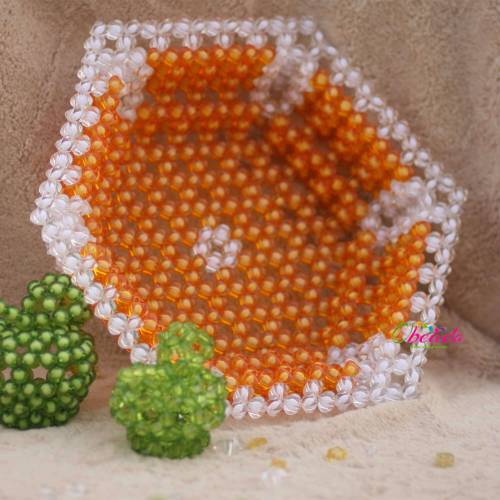
IV. Budget-Friendly Tips for Bulk Buying
Once you understand where costs come from, these tactics help you keep bulk orders lean without sacrificing the look your clients expect.
- Standardize your core inventory: Build a reusable base collection of beaded vases, table accents, and figurines in neutral colors, then customize only the accent pieces per event.
- Order in seasonal bulk: Placing one larger order ahead of peak wedding or holiday season almost always beats several small reactive orders.
- Ask about tiered pricing: Most handicraft supply manufacturers offer per-unit discounts at set volume thresholds — ask for the full pricing ladder, not just the quote for your current quantity.
- Mix craft wholesale categories in one shipment: Combining beaded bags, ornaments, and figurines from the same handcraft wholesale supplier in one container reduces per-item freight cost.
- Negotiate a small MOQ for testing new designs: A low minimum order quantity lets you trial a new style with a client before scaling up production.
- Lock in pricing with a longer-term agreement: If you run events regularly, ask about a standing purchase agreement — suppliers often price this more favorably than one-off custom handicraft wholesale orders.
- Reuse and rotate: Track which pieces are reusable across events and build a rental or rotation system internally, rather than buying fresh for every client.
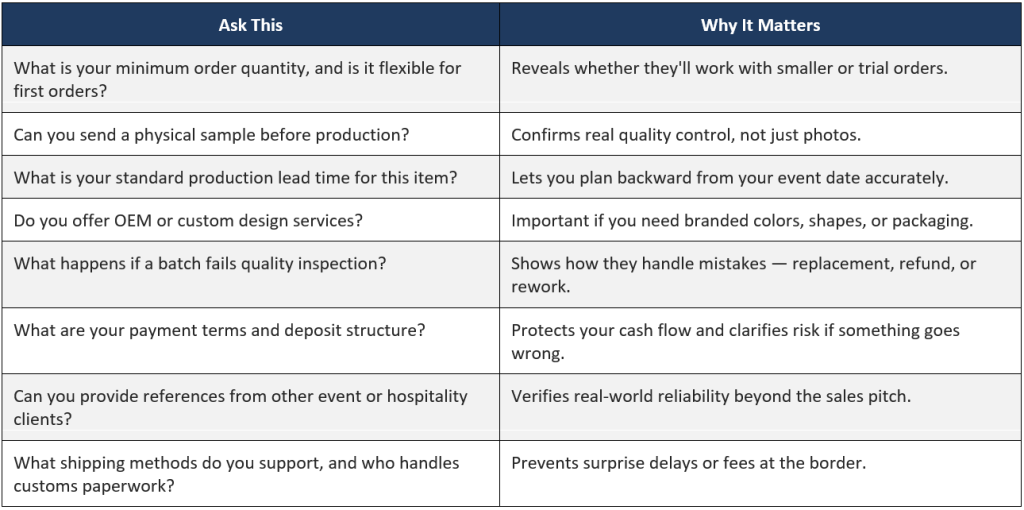
V. Questions to Ask a Wholesale Beaded Decor Supplier
The questions you ask before signing a purchase order tell you almost everything you need to know about how a supplier will behave after you’ve paid. Use this checklist on your first call.
VI. Real Use Cases: Beaded Decor Across Event Types
Beaded handicraft decor performs differently depending on the event format. Here’s how planners typically apply it across common event categories.
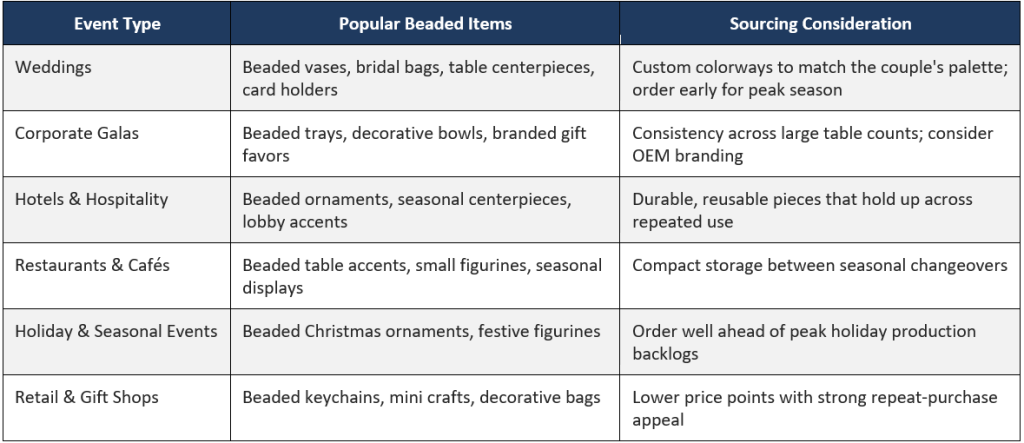
The common thread across every scenario is the same: planners who treat beaded decor as reusable, categorized inventory — rather than a one-time purchase — get significantly more value out of every wholesale order.
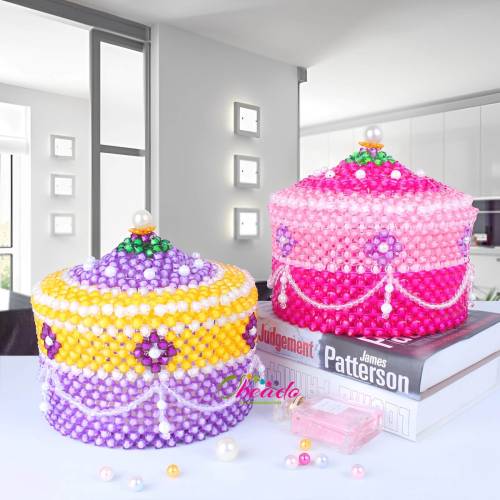
VII. Recommended Supplier of Beaded Handicraft
Sourcing beaded handicraft decor wholesale doesn’t have to mean choosing between quality and budget. Most of the overspending planners experience comes down to unclear briefs, rushed timelines, and skipped sample checks — not the cost of the craft itself. By understanding where budgets actually break down, following a structured sourcing process, and asking the right questions upfront, you can build a beaded decor inventory that looks premium at every event while staying well within your numbers.
Start with a clear brief, request samples before you commit, and build a relationship with a handicraft supply partner you can return to season after season. That consistency — more than any single discount — is what keeps beaded decor sourcing profitable and stress-free over the long run.
If you’re looking for a reliable partner rather than a one-time vendor, it’s worth working with a manufacturer that has real production history and a track record with event-focused clients.
Obeado is a beaded handicraft manufacturer based in Guangxi, China, with more than a decade of experience producing handmade beaded crafts for gift shops, hotels, restaurants, fashion brands, and event planning companies. What started as a small bead craft workshop in 2011 has grown into a full production operation, with a team of designers and skilled makers who have developed over 500 different beaded handicraft designs — including beaded vases, figurines, bags, ornaments, and seasonal decor.