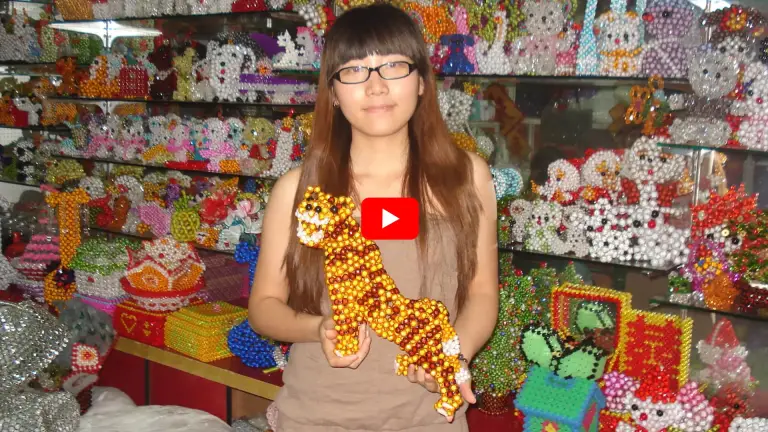
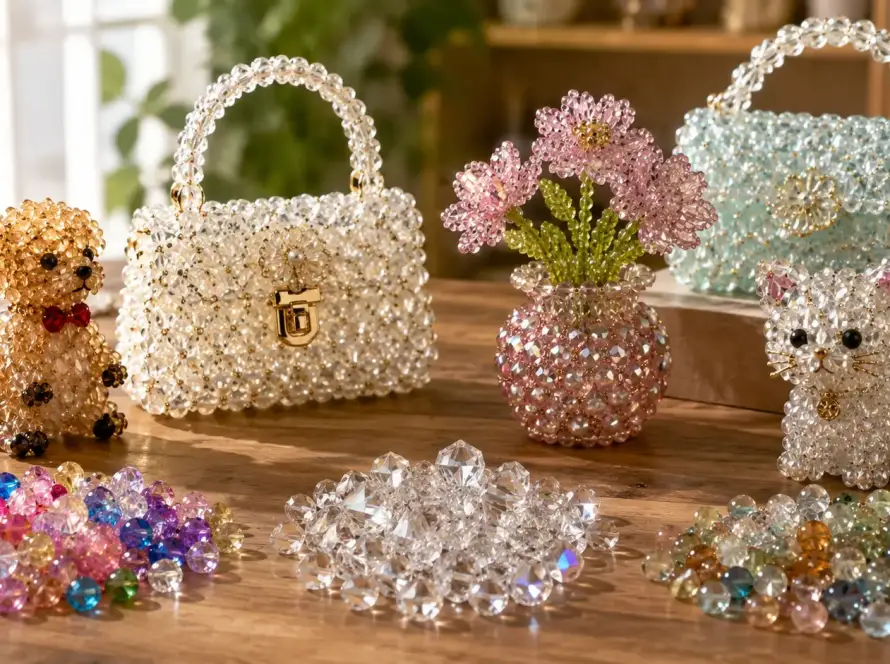
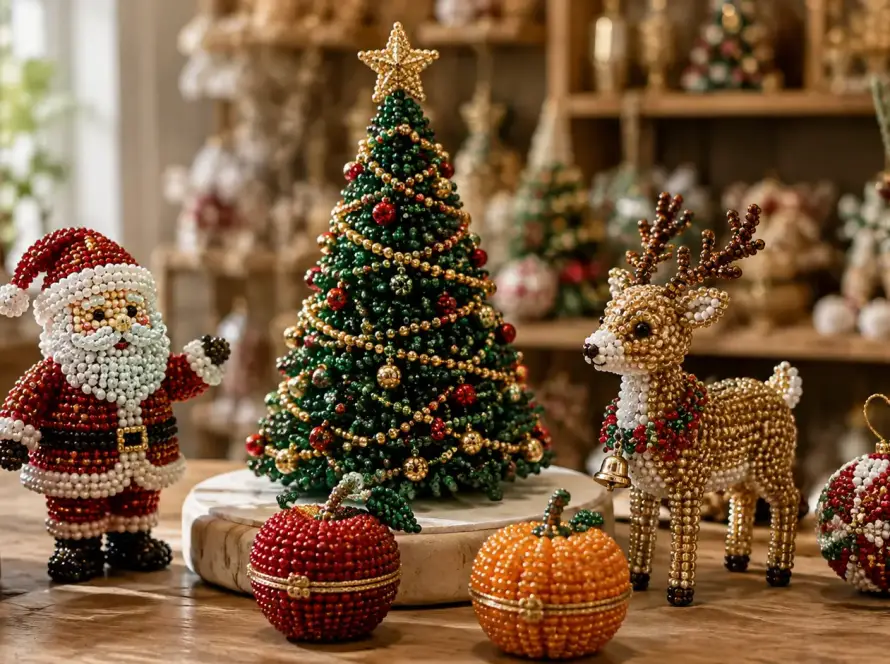
Walk through a well-merchandised gift shop during the holiday season and you’ll notice something: the ornaments that stop shoppers in their tracks aren’t always the shiniest ones on the shelf. Often it’s the pieces with texture — rows of tiny beads catching the light to form a Santa’s beard, the layered branches of a tree, or the ribbed curves of a pumpkin. Beaded Christmas ornaments have quietly become one of the more dependable categories in holiday décor, and for retail buyers, that dependability shows up as steady reorders rather than one-season fads.
This overview is written for buyers, boutique owners, and sourcing teams exploring beaded Christmas ornaments wholesale for the first time, or looking to sharpen an assortment they already carry. It covers why this category performs well at retail, breaks down the three ornament styles buyers ask about most — Santa figures, Christmas trees, and pumpkin-shaped charms — and explains what actually matters when sourcing handmade beaded Christmas ornaments from a manufacturer.
I. Why Beaded Ornaments Are Trending with Retailers & Gift Shops
A few years ago, beaded ornaments were mostly a craft-fair item. That’s changed. More gift shops, hotel retail corners, and lifestyle boutiques are stocking them as a category in their own right, and there are some clear reasons why.
First, they read as handmade — because they are. Each bead is strung or wired individually, which gives the finished piece a texture and dimensionality that injection-molded plastic or blown glass simply can’t replicate. In a retail display, that texture draws the hand before it draws the eye; shoppers tend to pick up beaded pieces to feel them, which is exactly the kind of interaction that leads to a sale.
Second, beaded ornaments photograph well. For shops that sell online or lean on Instagram and Pinterest for holiday marketing, the sparkle and shadow-play of beadwork tends to outperform flat, glossy surfaces in product photography.
Third, they fit a wide range of aesthetics at once. The same core technique can be styled for a farmhouse Christmas display, a boho holiday table, a vintage-inspired tree, or a more elevated, jewel-toned luxury look — which makes beaded Christmas decorations easier to merchandise across different customer segments without changing suppliers.
Finally, there’s durability. Unlike glass ornaments, beaded pieces generally hold up better to handling, shipping, and storage between seasons — a practical point that matters as much to a retailer’s bottom line as the design does.
II. Santa Claus Beaded Ornaments
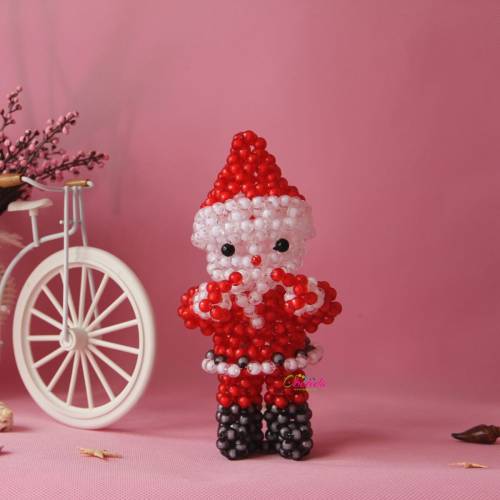
Santa is, unsurprisingly, the anchor figure of almost every Christmas assortment, and beaded Santa ornaments tend to be the first thing buyers ask about when they start exploring this category.
What makes beaded Santa designs work at retail is the amount of detail that can be built into a small object: a red-and-white beaded coat, a white beard rendered in seed beads, a tiny sack of gifts, or a rounder, “folk art” silhouette versus a slimmer, more modern one. Because the technique is so flexible, manufacturers can offer:
- Full-size Santa ornaments as a statement piece for a tree or mantel display
- Mini Santa versions suited to bulk gifting, stocking stuffers, or lower price-point impulse buys near the register
- Color and bead-finish variations (matte, pearlized, metallic) to match a shop’s existing palette
For gift shops and hotel retail counters in particular, Santa ornaments tend to sell in pairs or sets — a customer buying one for their own tree will often pick up a second as a gift. That makes this design a reliable, low-risk starting point for buyers building their first wholesale order in this category.
III. Beaded Christmas Tree Ornaments
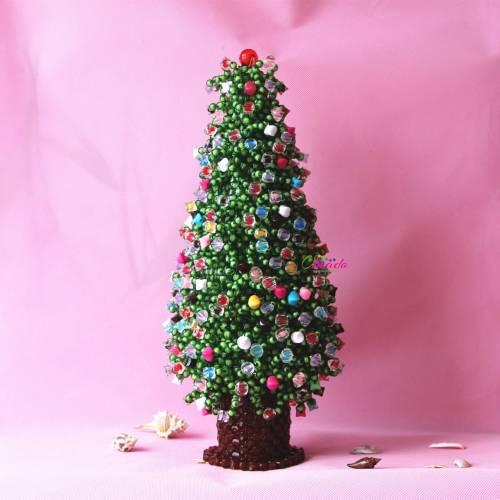
If Santa is the anchor, the tree-shaped ornament is the workhorse of the category. It’s the most literal expression of “Christmas,” it’s easy for shoppers to place anywhere in their home, and it scales across a huge range of sizes and price points.
A well-rounded tree-ornament lineup typically spans:

This range matters for buyers because it lets a single core design do double duty across a store’s assortment — a large tree as a hero display piece, and a smaller or keychain version as an add-on sale at checkout. It also lends itself well to co-branding or promotional runs, since a compact beaded tree with a ribbon or tag is an easy, memorable corporate holiday gift.
If you’re still mapping out your assortment, tree ornaments are usually the safest place to start experimenting with color stories — deep green and gold for a traditional look, white and silver for a winter-white theme, or jewel tones for something more contemporary.
IV. Pumpkin Charms & Cross-Seasonal Ornaments
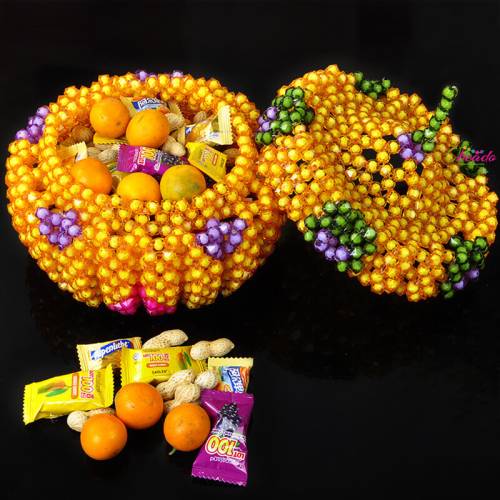
Here’s a detail that surprises a lot of first-time buyers: some of the strongest-performing pieces in a beaded Christmas assortment aren’t shaped like Christmas symbols at all. A beaded pumpkin, styled as a small box or charm ornament, is a good example of a cross-seasonal design that earns its shelf space twice.
Pumpkin-shaped beaded pieces typically enter a store’s inventory around Halloween or Thanksgiving, then transition naturally into a winter display alongside apples, deer, and other “charm” style ornaments as the season shifts toward Christmas. For a retailer, that’s a meaningful advantage — it stretches the useful selling window of a single SKU across two or three seasons instead of one, which improves sell-through and reduces the risk of leftover inventory after December 25th.
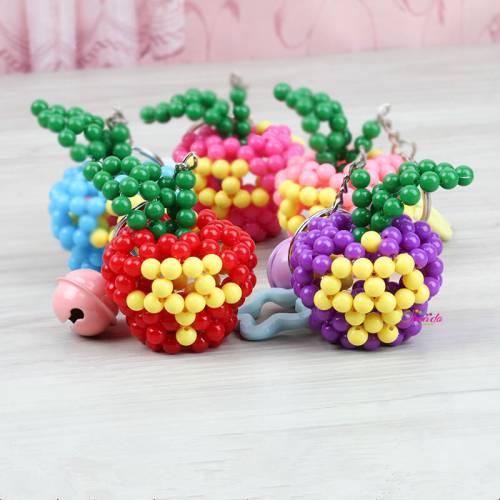
This is also where buyers often find some of their best ideas for filling out a category: charm-style pieces (pumpkins, apples, small woodland animals) tend to sell well as:
- Add-on items near the register
- Bundle fillers alongside a larger Santa or tree purchase
- Standalone gifts for customers who want something small and seasonal rather than a full ornament
If your current assortment leans heavily on the “big three” holiday symbols, a rotating cast of charm ornaments is usually the easiest way to add novelty without adding complexity to your buying process.
V. Materials & Craftsmanship Behind Beaded Ornaments
The quality difference between a beaded ornament that looks good on a supplier’s product photo and one that actually holds up on a store shelf almost always comes down to materials and construction.
Most finished pieces are built from a combination of:
- Seed beads for fine detail and texture (faces, fur, feathers)
- Glass beads for structural sections and light reflection
- Pearl-finish beads for a softer, more premium look
- A wire or thread core that holds the shape and gives the ornament its structure
- A hanging loop, pin, or cord attachment sturdy enough for repeated seasonal use
Construction method matters just as much as the beads themselves. Hand-strung and hand-wired pieces — the kind produced by skilled home-based artisans working from a manufacturer’s pattern — tend to hold their shape better over time than machine-assembled alternatives, and visible inconsistency is usually a sign of a rushed or poorly supervised production run.
For buyers, this is worth asking about directly during sourcing conversations: how the beads are secured, what the core structure is made from, and how the manufacturer checks consistency across a production batch. A supplier who can answer these questions specifically, rather than vaguely, is generally the one worth building a longer-term relationship with.
VI. Quality, Safety & Compliance
Because beaded ornaments are handled, displayed, and often shipped internationally, buyers should confirm a few compliance basics before placing a bulk order — this is easy to overlook when evaluating a supplier purely on design:
- Material safety: ask whether bead materials and any surface coatings are tested for restricted substances such as lead and cadmium, particularly for markets with strict consumer-product rules (e.g., the U.S. CPSIA or EU RoHS/REACH frameworks).
- Labeling: confirm country-of-origin marking and any required choking-hazard or small-parts language, especially if a design could plausibly be mistaken for a children’s toy.
- Batch consistency: request the supplier’s internal QC process — spot-checks, tolerance ranges for size/color, and how defective units are handled.
- Documentation: for larger orders, ask whether test reports or compliance certificates are available on request; a supplier accustomed to exporting will have these ready.
VII. Sustainability Considerations
Sustainability has become a more common question from gift-shop buyers over the past few seasons, and it’s worth raising early in a sourcing conversation rather than after a sample order:
- Recycled or reclaimed glass beads are increasingly available and can be marketed as a feature rather than a compromise.
- Packaging made from recyclable or minimally-processed materials reduces waste at the retail level and can be a selling point for eco-conscious customers.
- Hand-based, small-batch production naturally uses less energy per unit than fully automated manufacturing, which some buyers use as a talking point in their own marketing.
Not every supplier will have formal sustainability credentials, but most can speak to their material sourcing and production footprint if asked directly.
VIII. Wholesale Considerations for Buyers
Sourcing beaded Christmas ornaments wholesale is a little different from sourcing standard glass or plastic décor, mostly because of the labor-intensive, semi-handmade nature of the product. A few practical points make the process smoother:
- Minimum order quantity (MOQ). Because each piece involves manual beadwork, MOQs can vary significantly between manufacturers. Buyers testing a new design or a new supplier relationship should look for flexible, low-MOQ options rather than committing to a large first order.
- Beadwork is hard to judge from photos alone — color accuracy, bead density, and finish quality all read differently in person. A supplier that offers samples before a bulk commitment is worth prioritizing, even if it adds a short delay to the process.
- Custom beaded Christmas ornaments — adjusted colors, bead types, sizes, or private-label packaging — are common in this category, since the production method is naturally flexible. If your store has a signature palette or a branded gift line, ask early what customization is realistically possible.
- Lead times. Holiday inventory has a hard deadline. Because beaded pieces are made largely by hand, production timelines can run longer than for machine-made décor, so orders placed in late summer or early fall tend to arrive with far more breathing room than last-minute orders placed in October or November.
- Sourcing origin. A large share of the world’s finished beaded craft output comes from manufacturers based in China, where established bead-craft workshops and home-based artisan networks have built up real expertise over many years. When evaluating options, it’s worth looking specifically at how long a factory has been operating this particular craft, not just how long the company has existed.
- Shipping & payment terms. Confirm Incoterms (e.g., FOB, EXW, DDP), typical freight options for the order size you’re considering, and standard payment terms (deposit plus balance is common for first orders) before finalizing a purchase order.
- Packaging & retail-readiness. Ask whether individual poly-bagging, hangtags, barcoding, or presentation boxes are available — these small additions can save significant labor once inventory arrives at your store.
IX. How to Choose the Right Mix for Your Store
Once you understand the category, the real work is building an assortment that fits your specific store and customer base. A balanced design mix usually includes three layers:
- Anchor pieces — Santa and tree ornaments that customers expect to see and will actively look for
- Mid-tier variety — smaller trees, alternate Santa styles, or deer and animal figures that add browsing interest
- Impulse/charm pieces — pumpkin boxes, apples, and keychain-sized items positioned near checkout
A practical way to think about pricing tiers:

Buyers who are new to the category often make the mistake of over-ordering hero pieces and under-ordering impulse items, when in practice it’s usually the smaller, lower-priced charms that turn over fastest and keep customers coming back mid-season for a second or third piece.
X. Quick-Reference Checklist for First-Time Buyers
Before placing a first order, it helps to have a short list of questions ready for a supplier call:
- What is the MOQ per design, and can it be mixed across styles?
- Are physical samples available, and what is the sample lead time and cost?
- What customization is possible — color, size, private-label packaging?
- What is the production lead time for a full order, and does that fit a summer/early-fall placement window?
- Can the supplier provide material safety documentation on request?
- What Incoterms and payment terms are standard for a first order?
- Is retail-ready packaging (hangtags, barcodes, poly-bags) available?
XI. Recommended Supplier of Beaded Christmas Ornaments
Beaded Christmas ornaments have earned their place in serious holiday assortments, not just craft fairs — and the category rewards buyers who think beyond a single hero design. A thoughtful mix of Santa figures, tree ornaments across several sizes, and cross-seasonal charm pieces like pumpkin boxes gives a store both the anchor products customers expect and the impulse items that drive repeat visits through the season.
Whether you’re placing your first order or refining an assortment you’ve carried for years, the fundamentals stay the same: check the materials and construction, confirm safety and compliance basics, ask for samples, understand realistic lead times, and work with a manufacturer who can speak specifically to how their pieces are made. Get those right, and beaded ornaments can become one of the more consistent, well-performing categories on your holiday shelf.
For buyers ready to move from research to sourcing, Obeado Crafts Co., Ltd. is worth a direct look. Based in Guangxi Province, China, Obeado has been a dedicated beaded Christmas ornaments manufacturer since 2011 — starting as a small workshop and growing into a full production operation supported by an in-house factory and a network of skilled home-based artisans.
Obeado Crafts Co., Ltd.
Web: https://obeado.com/
Email: sales@obeado.com