The craft industry doesn’t get talked about with the same energy as tech or fashion, but ask any gift shop owner, hotel procurement manager, or boutique buyer restocking for the holidays, and you’ll hear a different story. Handmade goods have quietly become one of the steadiest growth categories in global retail, and 2027 is shaping up to be a pivotal year for the buyers and manufacturers who serve it. Rising demand for authenticity, a wave of new sourcing platforms, and shifting consumer taste for sustainable, one-of-a-kind pieces are all converging at once.
This article breaks down where the global craft market stands heading into 2027, the trends worth building a sourcing strategy around, and what to look for when choosing a crafts wholesale supplier — whether you’re restocking an existing catalog or building a private label line from scratch.
I. Global Craft Industry Market Size & Growth (2027 Outlook)
Estimates vary depending on how research firms define the category, but the direction is consistent across nearly every report: the global handicrafts wholesale market is growing faster than general retail. Grand View Research places the global handicrafts market on track to reach roughly $983 billion by 2030, expanding at a compound annual growth rate near 4.9% from 2025 onward, with woodwork, textiles, and decorative items leading product demand. Other industry trackers put the current market size well into the hundreds of billions of dollars already, with several forecasting double-digit CAGRs through the early 2030s as e-commerce and cross-border sourcing continue to lower the barrier to entry for smaller retailers.
A few figures stand out for anyone sourcing crafts wholesale in 2027:
- Asia Pacific remains the dominant production region, accounting for roughly a third of global handicraft revenue, with China, India, and Vietnam anchoring most of the manufacturing capacity.
- Mass retailers and specialty stores together account for the largest share of distribution, but online channels are the fastest-growing segment by a wide margin.
- Residential and hospitality décor — think hotels, restaurants, and event spaces — make up a growing share of commercial demand, not just individual consumers.
- Gifting and seasonal categories (holiday décor, wedding favors, corporate gifts) continue to outperform general home décor in terms of margin.
What this means practically is that the opportunity isn’t shrinking into a niche — it’s broadening. Buyers who once relied on a single domestic supplier are now sourcing internationally, and manufacturers who used to sell only to large importers are opening their doors to smaller retailers and DTC brands willing to order in modest quantities.
II. Key Trends Shaping the Craft Industry in 2027
A handful of shifts are defining how crafts move from workshop to shelf this year:
1. Authenticity Sells
Consumers are actively seeking out products that feel handmade rather than mass-produced. This isn’t just marketing language — buyers report that products with a visible human touch (uneven bead spacing, natural material variation) now perform better in gift and décor categories than perfectly uniform machine-made alternatives.
2. Sustainability Is No Longer Optional
Biodegradable, natural, and low-impact materials are moving from a nice-to-have to a baseline expectation, especially among younger buyers and hospitality clients who need to align sourcing with their own sustainability commitments.
3. Customization and Private Label Demand
Retailers increasingly want exclusive SKUs rather than the same generic item their competitor is also selling. This is driving strong demand for custom crafts wholesale arrangements — where a supplier can adjust colors, sizing, packaging, or even develop a design from a sketch.
4. Low-MOQ, Small-Batch Sourcing
Boutique retailers and independent brands can’t afford to sit on thousands of units of unsold inventory. Suppliers offering flexible minimum order quantities and fast reorder turnaround are winning business away from traditional bulk-only manufacturers.
5. Digital-First Sourcing
Trade shows haven’t disappeared, but a growing share of B2B buyers now find their crafts wholesale supplier through a Google search, a supplier’s own website, or a curated B2B marketplace long before they ever attend an in-person event. That makes a supplier’s online presence — product photography, clear pricing, and easy contact — a genuine competitive factor.
6. Seasonal and Occasion-Based Categories Growing Fastest
Christmas décor, wedding favors, and corporate gifting continue to post some of the strongest year-over-year growth within the broader craft supply category, rewarding suppliers who can turn around seasonal collections on a reliable timeline.
III. Spotlight: Beaded Crafts as a Growth Category
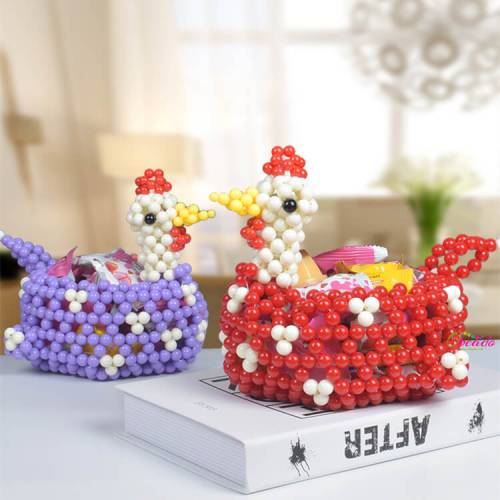
Within the wider handicrafts wholesale market, beaded crafts occupy a particularly interesting position. They sit at the intersection of several trends at once — handmade authenticity, natural and biodegradable materials, and strong customization potential — while also being genuinely versatile across product categories.
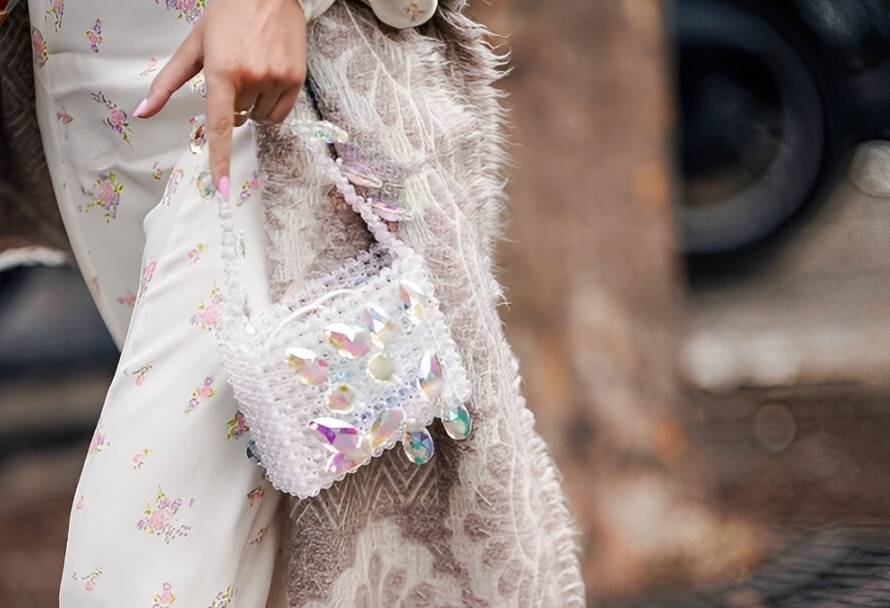
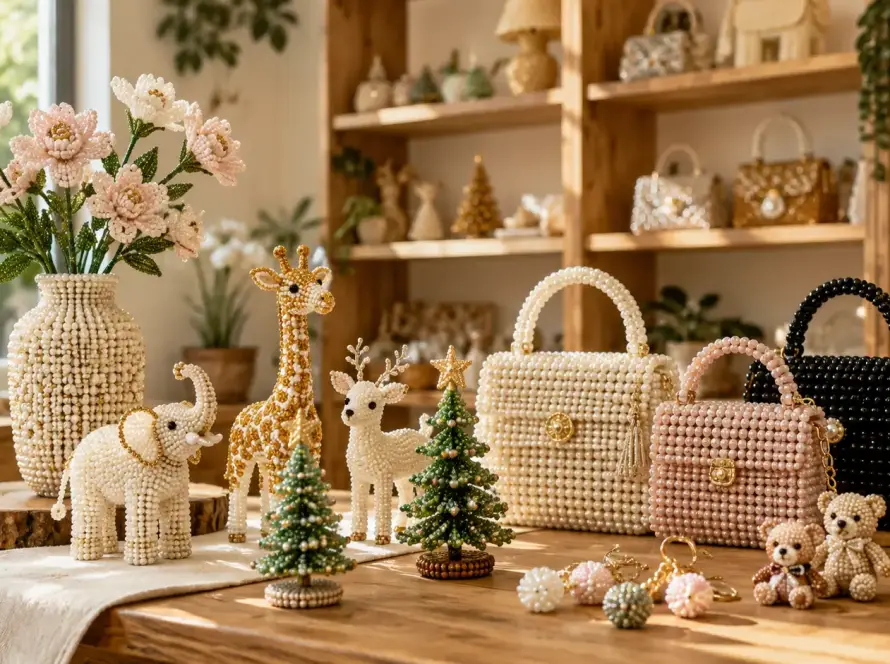
A single bead craft workshop can realistically supply beaded home décor, figurines, vases, bags, ornaments, and keychains, all from the same core skill set and material base. That versatility is a real advantage for retailers: a buyer sourcing beaded crafts wholesale for a gift shop can pull from décor, accessories, and seasonal categories through one relationship instead of juggling several suppliers.
Demand is also broadening beyond traditional gift retail. Hotels and restaurants are using beaded décor for table settings and seasonal displays. Event planners are turning to beaded pieces for wedding favors and centerpieces. Corporate buyers are adding beaded crafts to branded gift programs because they read as premium and handmade without carrying a luxury price tag. For a category once associated mainly with hobbyist crafting, that’s a meaningful shift toward serious B2B demand.
IV. Wholesale Opportunities: What Buyers Should Look For in 2027
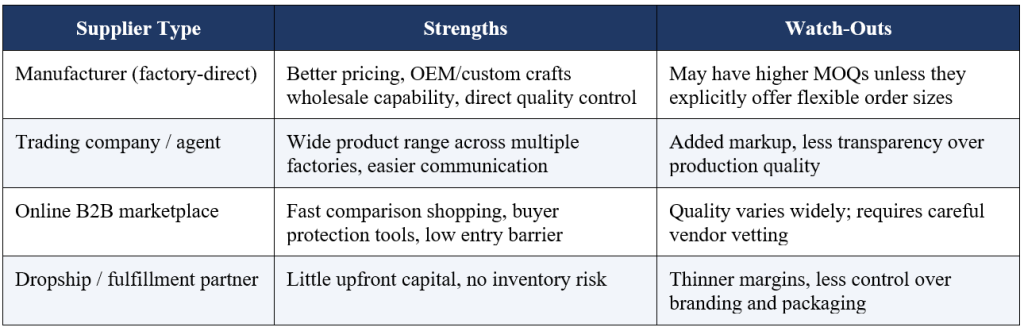
Not every crafts wholesale supplier is set up the same way, and the right fit depends on your business model, order volume, and how much control you need over customization. Here’s a quick comparison of the main sourcing routes:
Regardless of which route you choose, a handful of due-diligence steps apply across the board when evaluating a potential partner:
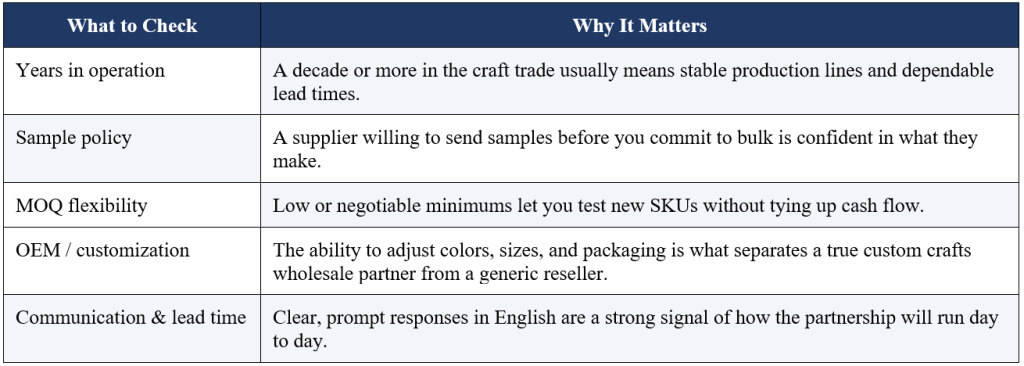
Sourcing crafts wholesale from China remains one of the most cost-effective routes for retailers worldwide, thanks to established manufacturing clusters, mature export logistics, and factories that have spent years refining specific craft techniques. The trade-off is that vetting matters more, not less — production quality among factories in the same region can vary significantly, which is exactly why samples and a documented track record carry so much weight in the decision.
V. How to Prepare Your Business for These 2027 Trends
Knowing the trends is one thing — building them into how you actually buy is another. The retailers who benefit most from a growing craft market tend to treat sourcing as an ongoing process rather than a once-a-year scramble before the holidays. The steps below break that process into concrete actions, roughly in the order you’d tackle them.
1. Order Samples Early — and Compare Them Side by Side
Sample requests are cheap insurance against a bad bulk order. Don’t wait until you’re under deadline pressure to test quality — build sample review into your calendar three to four months ahead of peak buying season. Request the same item from two or three suppliers in the same category so you’re comparing apples to apples: bead density, color consistency, packaging, and how the piece holds up to handling in transit.
- Ask each supplier for the same product spec so comparisons are fair.
- Check how samples are packaged — it’s a preview of how your bulk order will arrive.
- Keep a simple scorecard (quality, price, communication speed) so the decision isn’t just based on memory.
2. Diversify Seasonal SKUs Instead of Relying on One Collection
A single evergreen product line leaves revenue on the table. Christmas décor, wedding favors, and corporate gifting each have their own buying calendar and their own margin profile, and stacking two or three seasonal collections on top of a core catalog smooths out revenue across the year rather than concentrating it around one peak.
- Map out your buying calendar a full year ahead, working backward from each season’s in-store date.
- Ask suppliers which seasonal items are their strongest sellers — they often know before a trend report does.
- Start seasonal lines small and reorder based on real sell-through data rather than guessing at volume.
3. Prioritize Sustainable Materials — and Ask Suppliers to Prove It
Sustainability claims are easy to make and harder to verify, so it’s worth asking suppliers direct questions rather than taking marketing copy at face value: What are the beads made from? Are dyes and finishes non-toxic? What’s the packaging made of, and is it recyclable? A supplier who can answer specifically — rather than in generalities — is one whose sustainability story you can pass along to your own customers with confidence.
- Request material specification sheets, not just verbal assurances.
- Revisit sustainability questions with every new collection, not just once at onboarding.
- Factor packaging waste into the evaluation, not just the product itself.
4. Build Supplier Relationships Ahead of Peak Demand
Reliable manufacturers book up their production calendars well in advance of Christmas and wedding season, and buyers who reach out early get priority over those placing rush orders in October. Treat your top one or two suppliers as relationships to invest in year-round — regular check-ins, early notice of upcoming orders, and clear communication all pay off when capacity gets tight.
- Lock in seasonal production slots four to six months ahead of the selling season.
- Share your rough order forecast early, even if final numbers aren’t confirmed.
- Stay in touch between orders — suppliers prioritize buyers they hear from consistently.
5. Start with Low-MOQ Test Orders on Anything New
Full production runs are expensive to get wrong. Before committing to volume on a new or custom crafts wholesale item, place the smallest order a supplier will accept and use real sell-through data — not assumptions — to decide whether to scale up. This is especially useful for custom or OEM items, where a small first run also lets you catch any design adjustments before they’re baked into thousands of units.
- Treat the first order as a test, not a commitment to reorder at the same volume.
- Set a specific sell-through threshold in advance that triggers a reorder decision.
- Use test orders to validate pricing and shipping costs, not just product quality.
6. Keep a Backup Supplier — Before You Need One
Even a strong primary supplier relationship shouldn’t be your only source. Shipping delays, raw material shortages, and factory capacity issues happen without much warning, and scrambling to vet a new supplier mid-disruption is far more costly than doing it in advance. A vetted backup doesn’t need to carry regular volume — it just needs to be ready if your primary supplier can’t deliver.
- Qualify a second supplier with a small sample order, even if you don’t need the volume yet.
- Revisit backup options annually — pricing and capacity change year to year.
- Avoid concentrating more than a set share of any one category with a single supplier.
7. Strengthen Your Own Sourcing and Buying Process
As sourcing itself moves online, it’s worth auditing how your own team finds and evaluates suppliers — not just what you buy. Are you still relying on a single trade show visit per year, or actively researching suppliers through search and B2B directories year-round? Buyers who treat sourcing as a continuous, researched process tend to catch new suppliers, better pricing, and emerging trends before competitors who only look once a year.
- Set a recurring quarterly check-in to research new suppliers and categories.
- Bookmark supplier websites and catalogs so re-evaluating pricing is quick, not a fresh search each time.
- Document what worked and what didn’t with each supplier, so institutional knowledge doesn’t live in one person’s inbox.
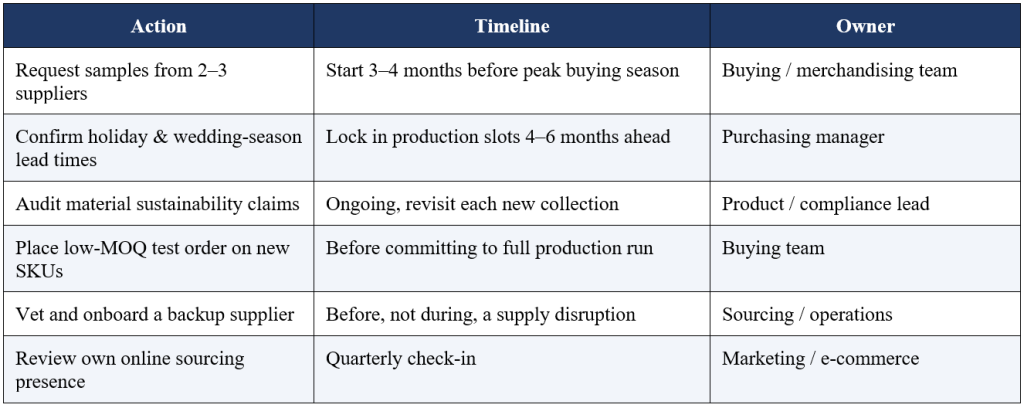
2027 Readiness Checklist at a Glance
VI. Recommended Supplier of Beaded Crafts: Obeado
The global craft industry heading into 2027 rewards buyers and suppliers who lean into what makes this category different from mass retail: authenticity, flexibility, and genuine craftsmanship. Market growth is real and well documented, but the businesses that benefit most will be the ones that treat sourcing as a relationship rather than a transaction — vetting suppliers carefully, testing with samples, and building in the seasonal and custom capacity that today’s buyers expect.
Whether you’re exploring crafts wholesale sourcing for the first time or looking to add a specialized beaded crafts wholesale line to an existing catalog, the fundamentals stay the same: work with manufacturers who can prove their track record, stay flexible on order size, and don’t disappear once the sale is made. That’s the kind of partner that turns a single order into a long-term supply relationship.
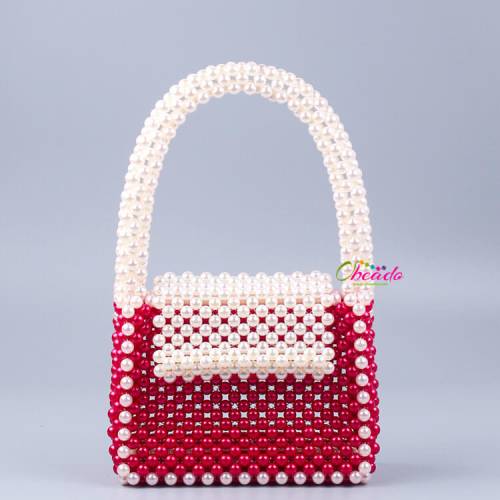
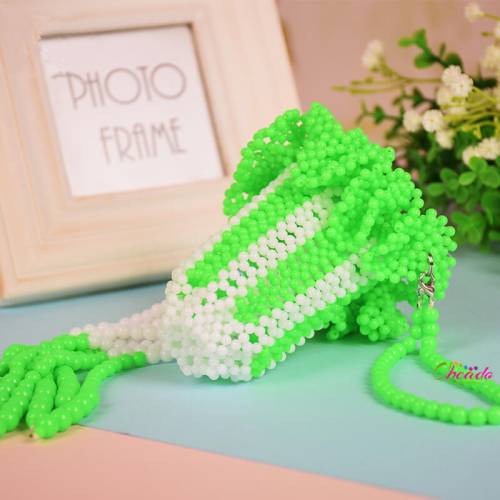
For retailers specifically sourcing beaded crafts wholesale, Obeado Crafts Co., Ltd. is worth a closer look. Based in Guangxi, China, Obeado has spent more than 15 years focused exclusively on handmade beaded crafts — from beaded home décor, figurines, and vases to beaded bags, keychains, and seasonal Christmas pieces.